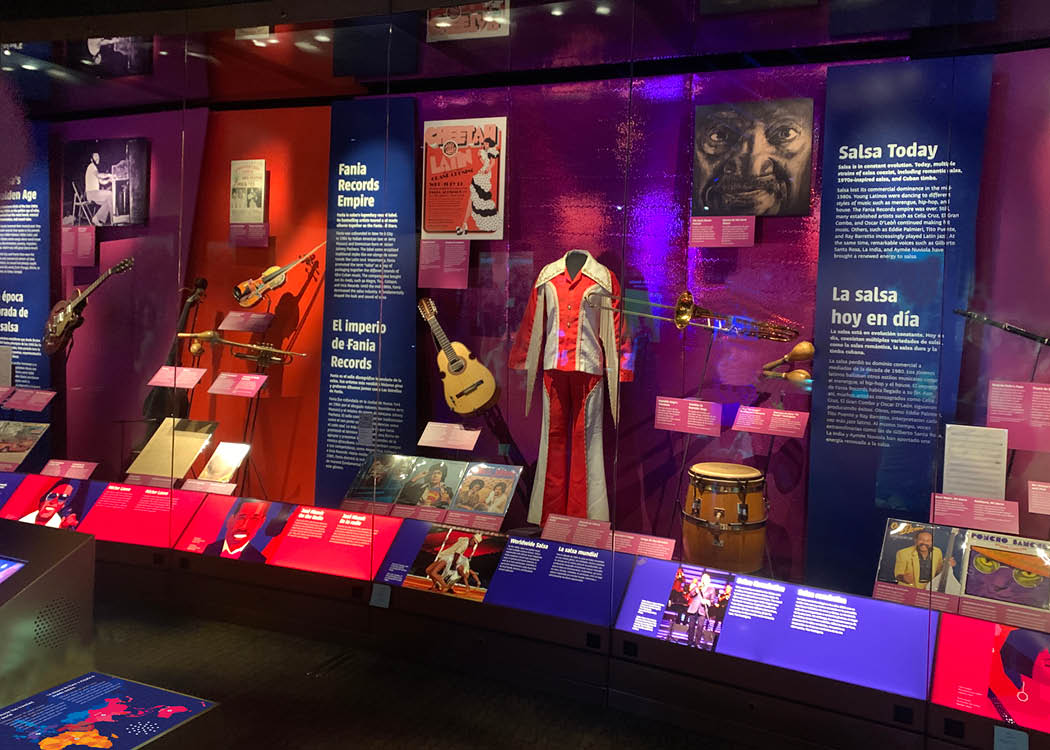
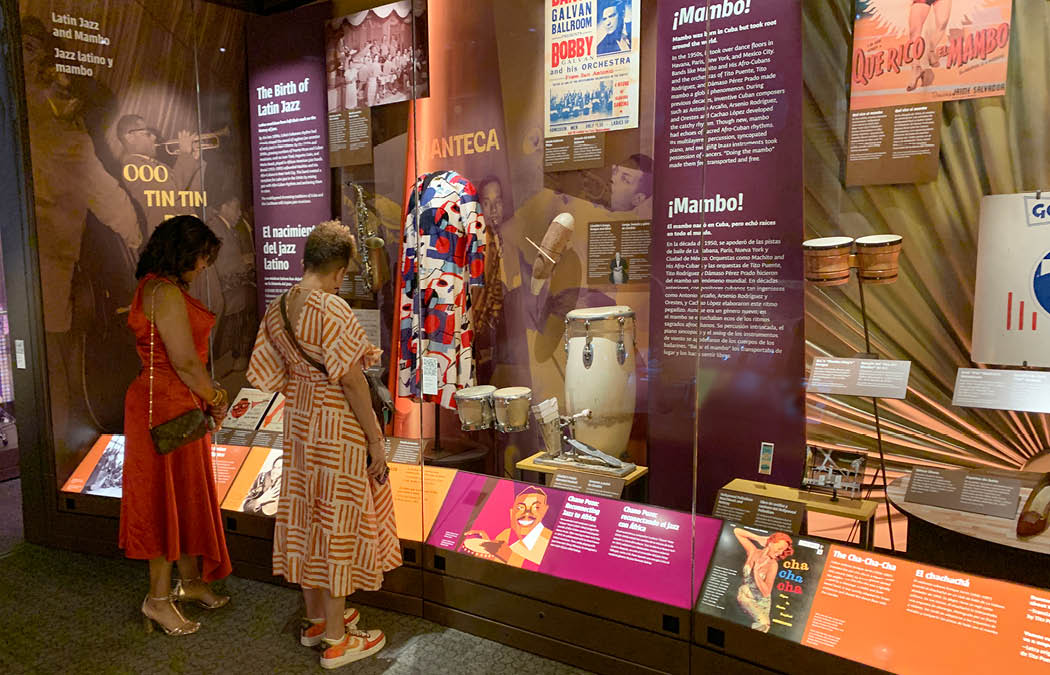
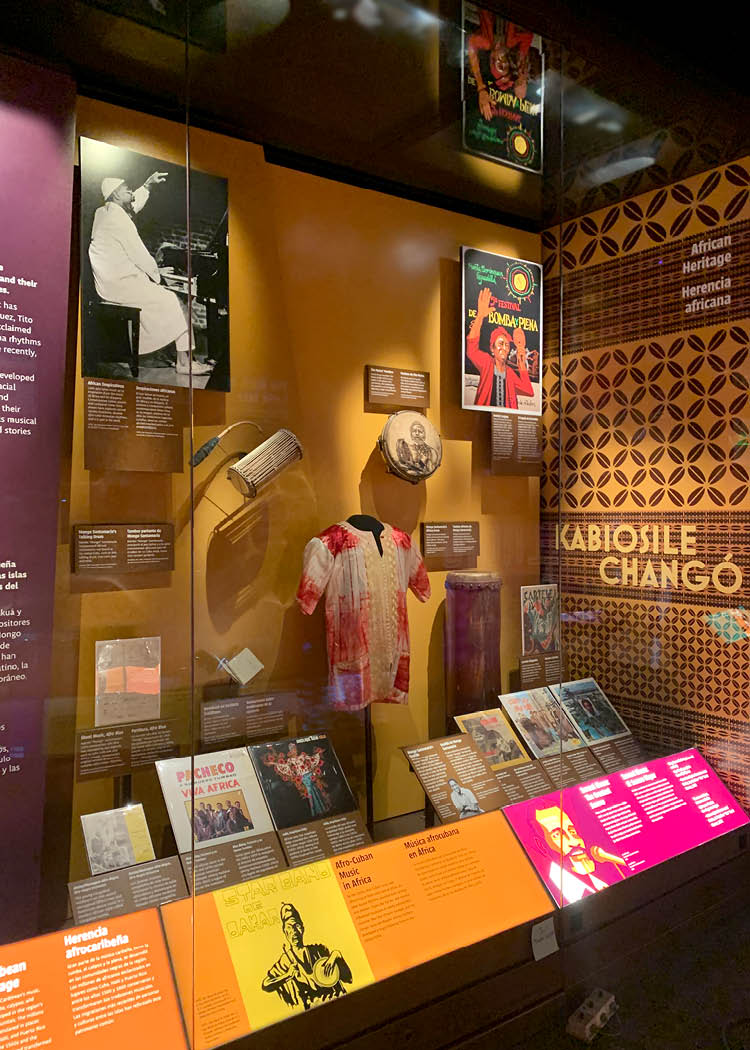
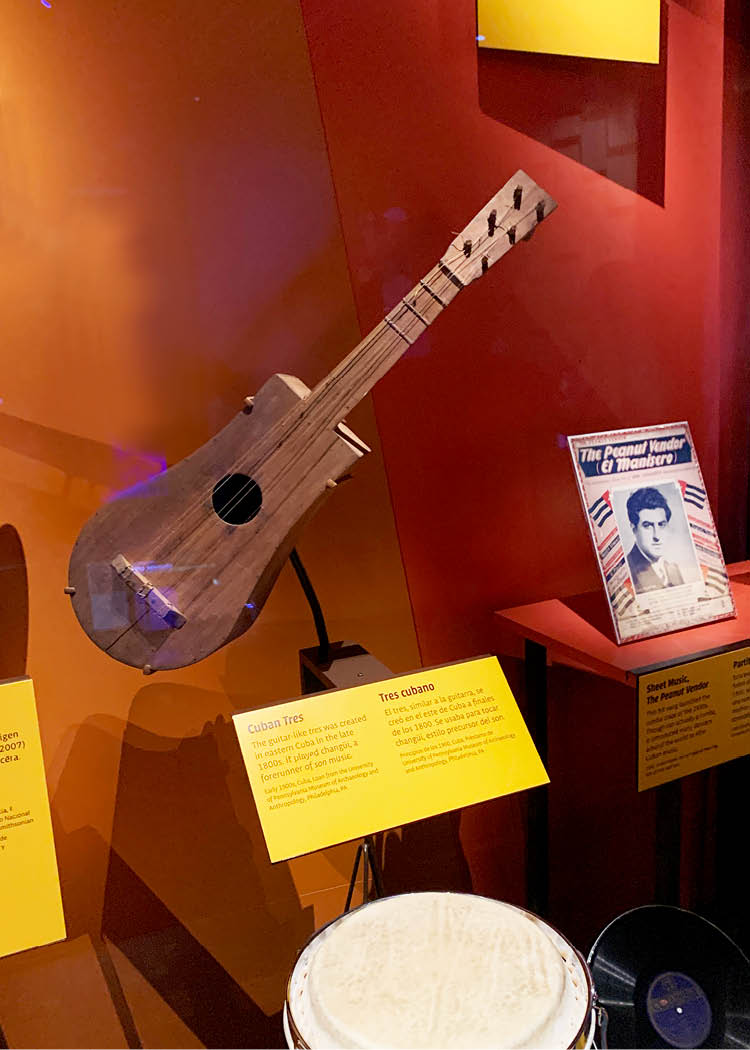
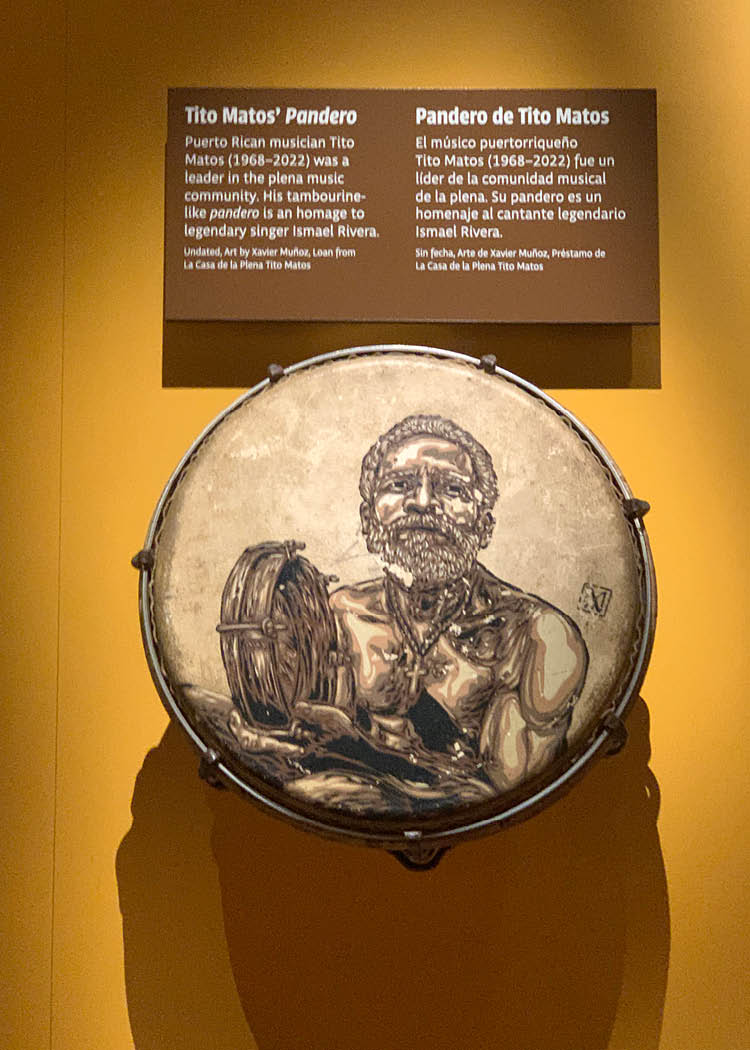
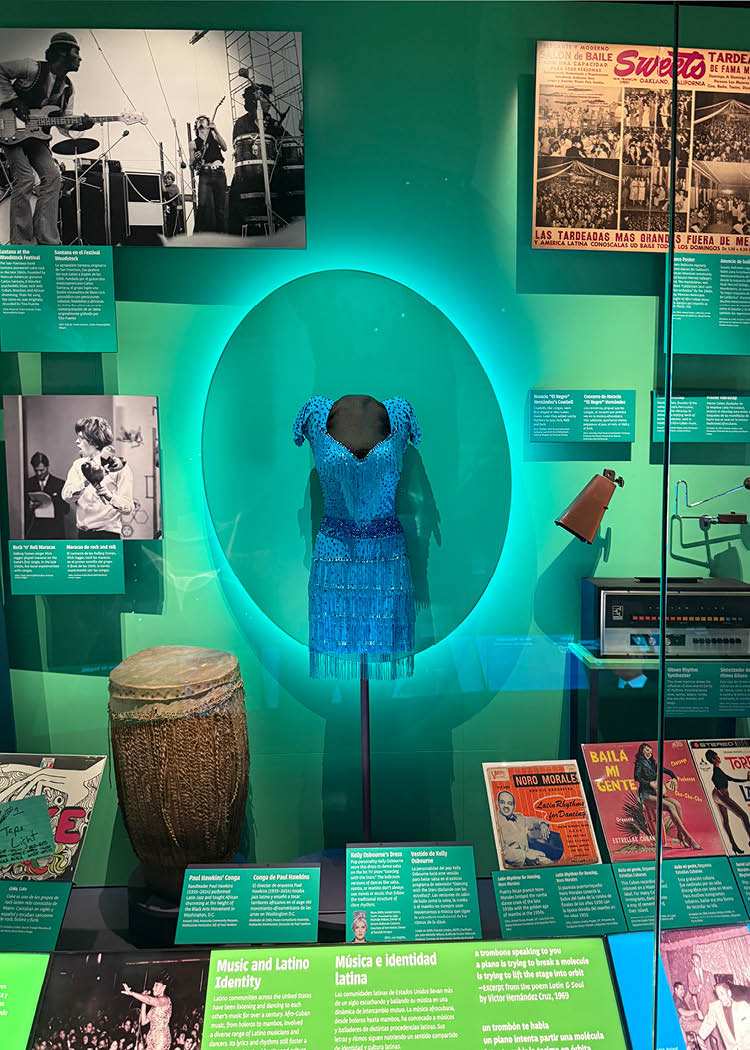
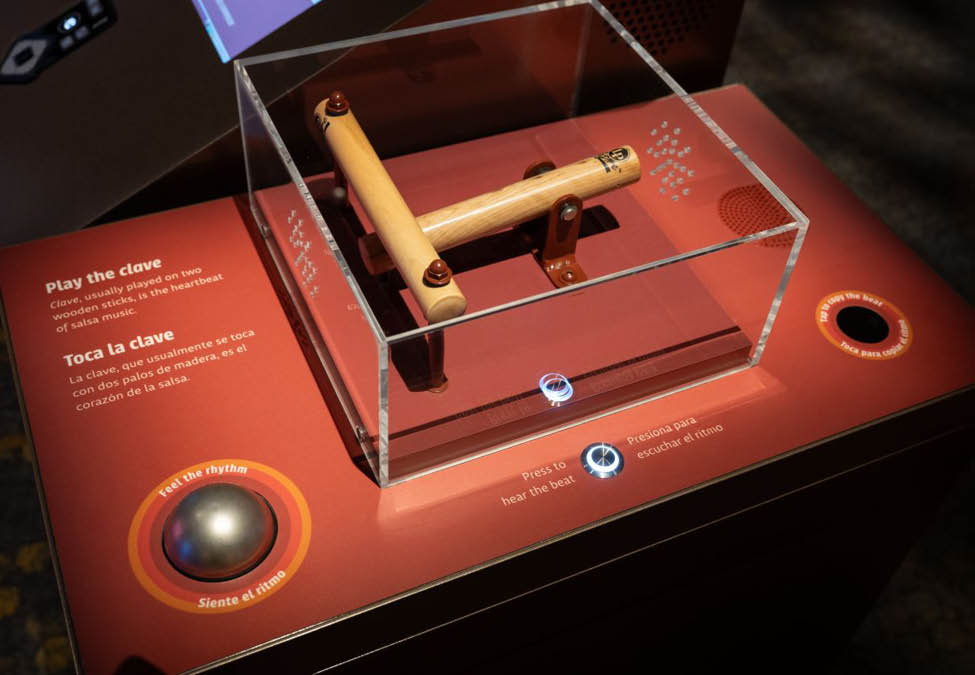
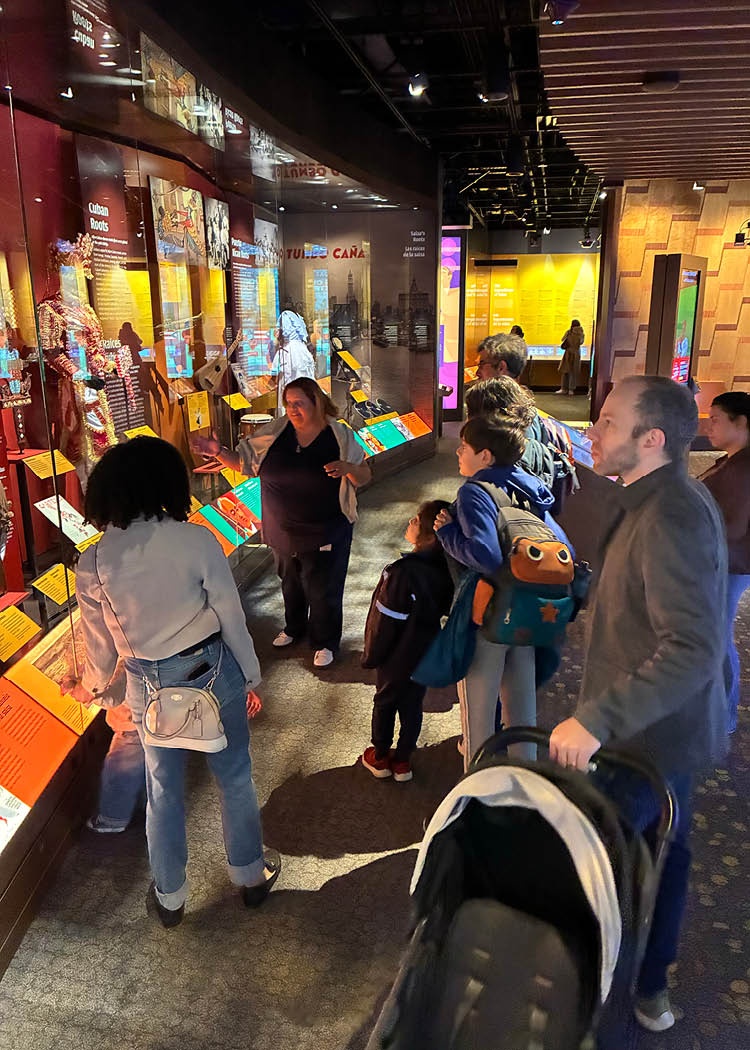
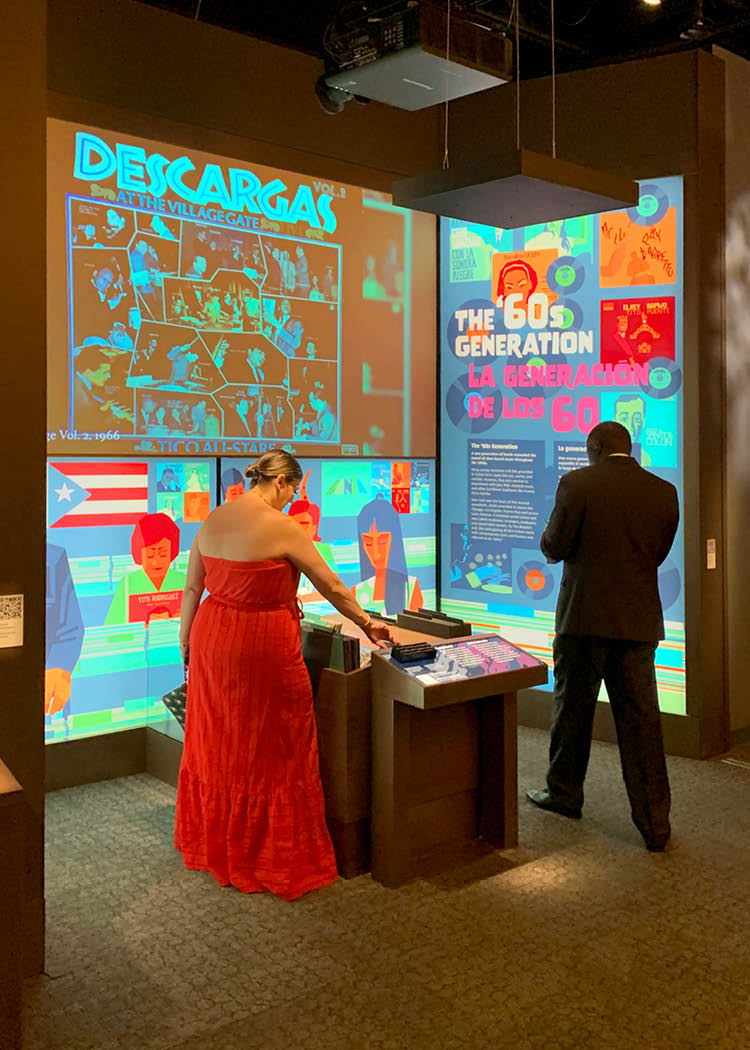
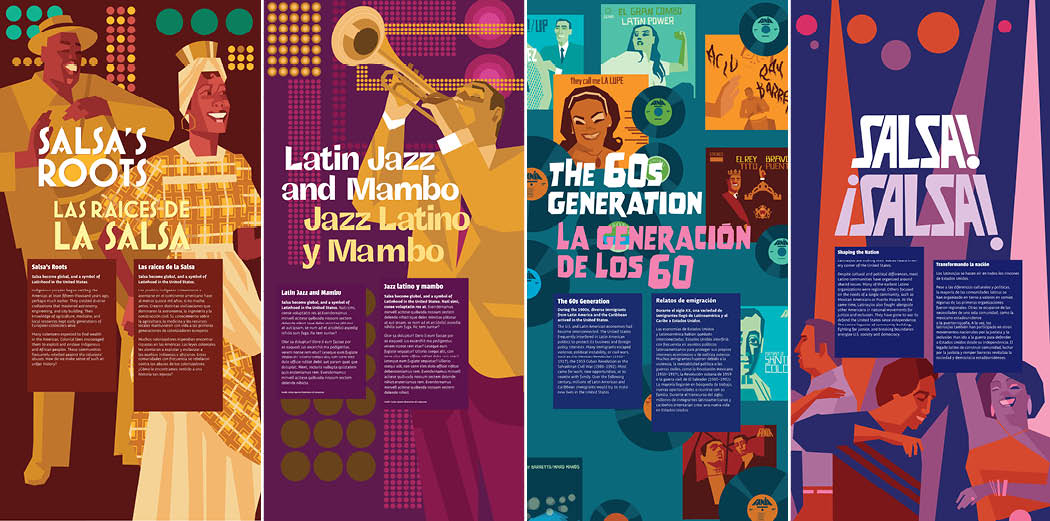
A Second Chapter for the Molina Family Latino Gallery: ¡Puro Ritmo! is the second exhibition designed by ME for the Smithsonian's Molina Family Latino Gallery, following ¡Presente! A Latino History of the United States. Our charge was to make it feel distinctly different from its predecessor, and we achieved that through art direction grounded in research into salsa's aesthetics from the 1970s and earlier, paired with a new lighting approach that shifts the tone of the experience to something more fitting for a vibrant, music-driven exhibit.
Reuse as a Design Strategy: ¡Puro Ritmo! also proved the long-term value of investing in generous case space for the first exhibition. Because ¡Presente! was designed with that foresight, we were able to reuse the same case infrastructure here rather than building new cases — and reused roughly 75% of all exhibit furniture from the original installation. Sustainability is a genuine challenge in exhibit design, and our approach favors reuse as the most effective way to minimize ecological impact — this project put that philosophy into practice at scale, saving cost while reducing its footprint.
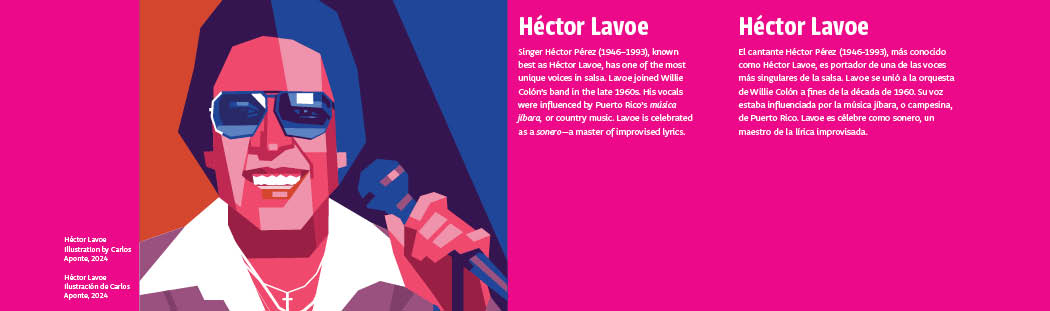
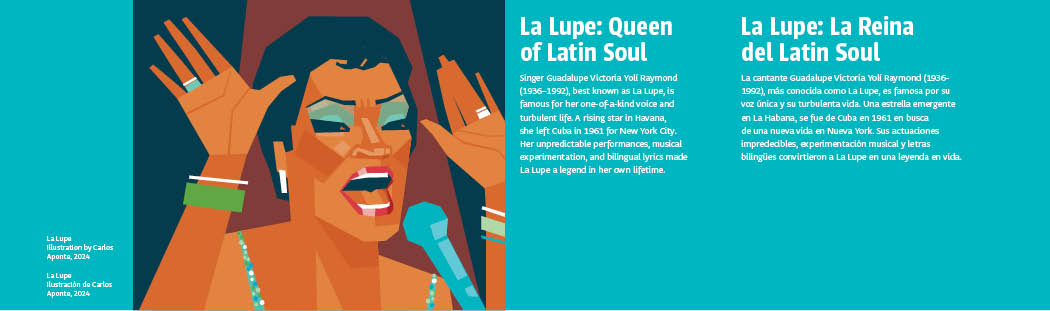
Co-Creation with Illustrator Carlos Acosta: In keeping with our continued commitment to co-creating exhibits with artists and communities, we brought on renowned Puerto Rican illustrator Carlos Acosta, who created large illuminated murals for the nook of each thematic section, along with the portrait illustrations featured on the reader rail at the base of every case.
On view in the LIM Art Museum from February 19 through May 24, 2026
The exhibition Video Games: The Great Connector is an immersive experience that aims to inspire youth and adults to explore academic and career opportunities in New York City’s dynamic digital gaming industry. The goal is to break away from the perception of video games as a non-productive use of time and instead show how games teach and connect their users and that a prosperous industry behind them merits attention.
The exhibit is organized into three sections:
CONNECTING WITH SELF section of the exhibition invites visitors to actively explore how games develop skills that shape their identity and manage their emotions, fostering a sense of active participation and engagement.
CONNECTING WITH COMMUNITY section of the exhibition lets visitors investigate how games foster community and broaden awareness of the world.
CONNECTING WITH FUTURE section of the exhibition is a gateway for visitors to explore the diverse and promising career paths in the gaming industry, inspiring them with the real-world relevance and potential of this dynamic field.
The design goal of the exhibition was to create an engaging and immersive digital environment. With that purpose, we maximized the size of the digital media to the extent that the budget permitted and fostered a studio/lab atmosphere that befitted a minimal build-out. We also designed with a sustainable goal in mind by employing reusable elements and thus provided the client with exhibit equipment to be used in the future.

The Harlem Gallery of Science produced the exhibition.
Exhibit Design: Museum Environments with the assistance of Marlyka Williams.
Curators: Barry Joseph, Nick Martinez, and Ashlyn Sparrow
Graphic Production and Installation: Color X
Audio Visual Installation: Chris Rice
Location: Harlem School of the Arts
The design provides the largest projections possible and concurrently allows easy packing and reinstallation at another site.
This exhibition was developed in close collaboration with three groups of advisories. One was a Youth Advisory composed of New York City teenagers. The second was a Community Leaders Advisory composed of individuals from learning institutions in and around Harlem. The third was a Games Expert Advisory composed of game designers, academics and others promoting the pro-social use of digital games in NYC
< The "Youth Advisory" from Harlem volunteered images of their avatars.
Copyright © 2026 · All Rights Reserved · Museum Environments
· Log in